
台灣談地熱,真正的出發點不是「再多一種綠能」,而是電力系統在高比例太陽能與風電之後,對可調度、可預測、接近基載的低碳電源需求會急速上升。太陽能與風電在減碳上功不可沒,但它們的產出具有明顯的日夜與季節性,當系統需要更高的供電可靠度、更少的備用容量、更低的尖峰調度成本時,地熱的價值就不再只是每度電的發電成本,而是「系統價值」:它能在不看天候臉色的條件下穩定供電,減少對燃氣機組的調度依賴,並提高電網在尖峰與低再生能源時段的韌性。
在技術本質上,地熱與多數再生能源的差異非常關鍵:地熱不是單純蓋一座電廠,而是「地下資源開採+地面電廠」的複合產業。地面電廠(例如 ORC 二元循環機組)的工程風險相對可控,真正決定成敗的是地下端:探勘、鑽井、試井、回灌管理,以及長期衰減(decline)控制。這也直接決定地熱專案的資本曲線:前期風險高、資本密集、資訊不對稱嚴重;一旦資源確證、井場與回灌穩定,反而會變成現金流較穩定、可長期運轉的資產。換言之,地熱融資與風險分攤的設計,比單點 IRR 更重要。
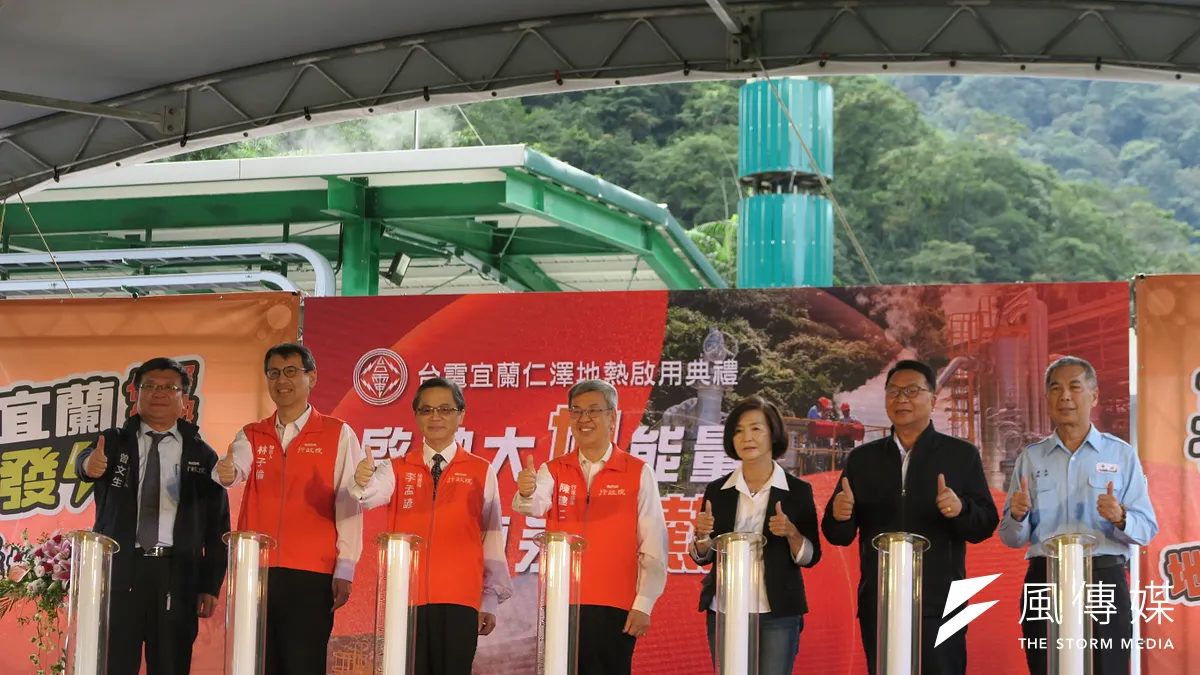
就台灣的主流可行路徑而言,現階段最具商業化可行性的是水熱型(hydrothermal)搭配二元循環(Binary/ORC)。宜蘭清水地熱電廠採用二元循環技術、裝置容量約 4.2 MW,並於 2021 年投入商轉,這個案例之所以重要,不僅是「台灣又有地熱電廠」,而是它讓市場重新看到:在台灣既有的溫度與地質條件下,二元循環可以以相對可控的環境與安全管理框架落地運轉,並累積運維與井場管理經驗。
資源禀賦並不差,但真正的瓶頸多半出現在「制度、成本曲線與社會面」
台灣的優勢,首先來自地質與空間結構。官方對外說明中,已點名多處具地熱潛力或正在推進的區域,包括宜蘭清水、仁澤、土場、花蓮瑞穗、台東紅葉/知本/金崙,以及大屯山系等。這意味著台灣不是「沒有資源」,而是資源呈現點狀分布,必須用專案組合(portfolio)與區域化開發策略,把點狀資源轉化為可複製的開發流程與供應鏈能力。
其次,台灣的需求端正在改變市場結構。當企業開始追求24/7(逐時段)低碳電力,僅靠太陽能綠電憑證或日間發電並不足以支撐其用電型態,地熱在企業購電(Corporate PPA)場景裡的吸引力會上升。2025 年 Google 與瑞典開發商 Baseload Capital 在台灣簽署 10 MW 地熱企業 PPA,被 Google 自身與開發商稱為台灣首宗企業地熱購電協議,並預期可在 2029 年為電網增加 10 MW 地熱電力;此案也被多家能源媒體解讀為「把地熱從示範推向可融資的市場化起點」。這類交易的價值在於它改變了風險分攤:長期購電承諾能把部分市場風險從開發商轉移出去,讓資本市場更容易接受前期的高風險投入。 (相關報導: 觀點投書:走鋼索的民進黨政權能源政策─我們的AI榮景能撐多久? | 更多文章 )
但台灣的挑戰同樣清晰,而且多半不是技術本身,而是「風險如何被制度化處理」。地熱最大的風險在探勘與鑽井:井可能不出水、流量不足、溫度不如預期,或回灌條件差導致壓力衰減與產能下降。這類風險高度前置,且常常在投入大量資本後才揭露,於是形成一個典型的市場失靈:銀行不願意在資源未確證前提供長期資金,純股權投資又會要求非常高的回報來補償風險,最後反而讓專案難以跨過「第一口(或前幾口)井」的資金斷層。若沒有公共政策工具(例如風險勘探補助、鑽井風險保險、或以階段性里程碑撥款的共融資)介入,地熱即便資源存在,也容易陷入「有點位、缺資本、缺可複製能力」的停滯。
此外,台灣地熱還面臨許可與利害關係人的複雜度。地熱涉及土地(甚至是原住民保留地)、地下資源、環評、用水與回灌、社會接受度與地方治理,多頭主管機關容易造成程序不確定與時程風險。從投資人角度看,這些不確定性往往比工程風險更可怕,因為它會直接侵蝕開發期現金流、抬高融資成本,甚至使 PPA 或 FIT 收入在時間上失配。
Case Study:從清水到企業 PPA,台灣地熱正在從「工程示範」走向「資本結構與商業模式示範」
談台灣地熱的現狀,最具代表性的仍是清水地熱。Taipei Times先前的報導指出,清水電廠於 2017 年開始建設、初期投資約新台幣 7.65 億元,並在 2021 年完成並於同年投入運轉;到 2023 年中已累積發電量達一定規模。這個案例提供市場幾個重要訊號:第一,台灣並非無法建成商轉的地熱電廠;第二,成本結構與工期管理的經驗可被後續案場複製;第三,地熱若要擴張,關鍵不在於「能不能做」,而在於「能不能把探勘、鑽井、試井、回灌與運維標準化,降低每一案的不可預期性」。
第二個重要的市場訊號,來自外資與國際供應鏈的介入。Ormat(國際地熱技術與機組供應商)在其公告中提到,2021 年清水 4.2 MW 專案商轉後,台灣將有更多地熱發展;並提及傑源能源開發、風予綠能與 Ormat 簽署合作,計畫在新北與宜蘭共同開發總裝置容量逾 20 MW 的地熱電廠。這類合作代表兩件事:一是台灣市場開始被國際供應商視為可成長的商業市場,而不只是單一示範案;二是本土開發商若能與國際技術、鑽井與運維能力整合,可更快跨越學習曲線。
第三個訊號,則是前述 Google × Baseload Capital 的企業 PPA。從 Google 官方公告與 Baseload 的新聞稿可確認,該協議目標是在台灣新增 10 MW 地熱供應,並被描述為一個具有「帶動市場」意義的起點。對台灣來說,這件事的象徵性甚至大於容量本身:它把地熱的價值論述,從「政府政策與示範工程」推向「企業用電需求與資本可融資性」。當企業願意用長約與信用背書支撐地熱開發,後端的融資成本、以及整體專案的可行性評估方法都會跟著改變。
台灣正在把「地熱開發的不確定」納入法制,但仍需在實務上降低交易成本
台灣地熱政策的關鍵進展之一,是把地熱的探勘與開發程序明確納入《再生能源發展條例》的制度框架。公開資料指出,該條例於 2023 年 6 月 21 日修正納入地熱相關專章或條文,之後經濟部能源署並於 2024 年 5 月 13 日公告「地熱能探勘開發許可及管理辦法」(英文資料亦有對應名稱),用以明確規範探勘與開發許可的申請與管理流程。這類制度化的價值在於:它降低了法規的不確定,讓開發商與投資人至少能用同一套程序與時程假設來做專案管理與資本規劃。 (相關報導: 觀點投書:走鋼索的民進黨政權能源政策─我們的AI榮景能撐多久? | 更多文章 )
此外,投資誘因的另一根支柱是躉購費率(FIT)。能源資訊彙整平台與官方資料顯示,2025 年地熱 FIT 延續 2024 年水準,並依裝置容量區分:2,000 kW 以下與 2,000 kW 以上分別採不同費率(公開資訊列示為 2,000 kW 以下新台幣 5.9459 元/度、2,000 kW 以上新台幣 5.1956 元/度)。這個設計反映了政策試圖平衡兩個目標:一方面用較高費率支撐早期小型案場與試點,另一方面避免大型案場在成本下降後仍享有過高補貼。然而,從投資可行性角度,單純的 FIT 水準未必是最大問題,真正的重點是 FIT 能否在行政程序、併網條件、與探勘開發許可的時序上與專案進度匹配。若許可延宕或併網條件不確定,即使名目費率好看,融資成本也會把收益吃掉。
因此,台灣地熱政策的下一階段不只是「有法、有 FIT」,而是要降低交易成本:讓許可流程的時間、資料要求、跨機關協調與地方溝通更具可預期性,使得開發商可以像管理其他基礎設施專案那樣管理地熱,而不是每個案子都像一次性的政策談判。
未來建議:把地熱從「單點成功」推向「可規模化」,需要少量但精準的制度與金融設計
我認為台灣地熱下一步的關鍵,不在於喊更高的目標,而在於用更精準的制度設計,把最前端的高風險階段變得可承擔。以下建議我刻意控制在少數幾點,避免變成筆記式羅列,但每一點都直接對準目前最傷 IRR 的痛點。
第一,應建立「探勘與鑽井風險的公共分攤機制」,否則地熱永遠跨不過早期資本斷層。國際上常見的做法不是政府替市場做完所有事,而是政府用風險緩釋工具把 private capital 引進來:例如以里程碑(完成 MT、完成第一口井、完成試井)分段補助,或建立鑽井風險保險與保證基金,讓失敗井的損失不至於完全由早期投資人吸收。台灣若能把這套機制制度化,市場才會從「個案碰運氣」走向「可複製的資本配置」。
第二,應把企業 PPA 視為地熱市場化的主戰場,並讓制度更支持長約、信用與併網安排。Google × Baseload 的案例證明企業端願意為 24/7 低碳電力付出長期承諾,這對地熱尤為重要,因為地熱需要長期穩定現金流來支撐前期高資本投入。政策端若能在電力交易、憑證、與併網可預期性上進一步降低企業採購門檻,地熱將更容易形成「以需求帶動供給」的正循環。
第三,應以區域化方式打造「井場—機組—運維」的供應鏈能力,而不是把每個地點都當作孤島。地熱的學習曲線主要在地下與運維,若台灣能以一到兩個高潛力區域(例如宜蘭、花東或北台灣特定地帶)做出連續案場,讓鑽井團隊、回灌管理、化學處理與機組維護形成規模經濟,單位成本下降與工期可控性就會大幅改善。Ormat 與本土開發商推進的多案場合作,本質上就是朝這個方向靠攏。
最後,政策評估應更明確把地熱的價值從「每度電成本」提升到「系統價值」:在高比例再生能源的未來,能提供穩定出力的低碳電源,其容量信用與調度價值會上升。若電力市場機制仍只用單一電價看待所有綠電,地熱的長處就難以被正確定價;相反地,只要能在容量、可靠度或逐時段低碳屬性上建立更合理的價值回饋,地熱就不需要靠無限拉高 FIT 來生存,而是靠「更接近電力系統真實需求」的收益組合,走向長期可持續。
(相關報導: 觀點投書:走鋼索的民進黨政權能源政策─我們的AI榮景能撐多久? | 更多文章 )
Geothermal as Taiwan’s Missing Piece in the Energy Transition: Potential, Risk, and Institutional Choice
Taiwan’s renewed interest in geothermal power is not driven by the desire to add yet another renewable technology to its energy mix. Rather, it reflects a structural shift in the power system itself. As solar and offshore wind scale rapidly, Taiwan is entering a phase where the marginal challenge is no longer carbon intensity, but system reliability. Intermittency, seasonal variability, and rising peak-balancing costs are becoming central concerns. In this context, geothermal’s relevance lies less in its levelized cost of electricity and more in itssystem value: dispatchable, predictable, and near-baseload low-carbon generation that reduces reliance on gas-fired balancing capacity and strengthens grid resilience during low-renewable hours.
Technically, geothermal differs fundamentally from most other renewables. It is not simply an above-ground power plant, but a hybrid industry combining subsurface resource development with surface-level generation assets. While surface facilities—such as binary Organic Rankine Cycle (ORC) plants—are relatively standardized and bankable, project success is determined underground: exploration quality, drilling outcomes, reservoir behavior, reinjection performance, and long-term decline management. This asymmetry defines geothermal’s capital profile. Risk is front-loaded, capital intensive, and information-poor at early stages; once the resource is proven and reservoir performance stabilized, the asset can transition into a long-life, cash-flow-stable infrastructure investment. Consequently, for geothermal, financing structure and risk allocation matter far more than a single-point IRR. (相關報導: 觀點投書:走鋼索的民進黨政權能源政策─我們的AI榮景能撐多久? | 更多文章 )
In Taiwan, the most commercially viable pathway today is hydrothermal geothermal paired with binary (ORC) technology. The Chingshui (Qingshui) geothermal plant in Yilan—approximately 4.2 MW and commercially operational since 2021—remains the country’s most important reference point. Its significance lies not in capacity, but in proof of concept: under Taiwan’s geological and environmental conditions, binary geothermal can be deployed within manageable safety, regulatory, and operational parameters, while gradually building local expertise in reservoir and well-field management.
Adequate Resources, Structural Bottlenecks
Taiwan’s geothermal challenge is not a lack of resources, but the way those resources are embedded in institutional, financial, and social constraints. Government assessments have identified multiple prospective zones—including Yilan, Renze, Tuchang, Ruisui, Chihpen, Jinlun, and the Tatun volcanic area—suggesting that geothermal potential exists, albeit in geographically dispersed and heterogeneous pockets. This spatial reality implies that scale will not come from a single mega-project, but from portfolio development and regional clustering that allow learning curves, supply chains, and operational practices to be replicated. (相關報導: 觀點投書:走鋼索的民進黨政權能源政策─我們的AI榮景能撐多久? | 更多文章 )
Demand-side dynamics are also shifting. As large corporate electricity users pursue 24/7 carbon-free power, daytime solar procurement alone is no longer sufficient. This has elevated geothermal’s strategic appeal in the corporate PPA market. In 2025, Google and Sweden-based Baseload Capital announced a 10 MW geothermal corporate PPA in Taiwan—widely described as the island’s first of its kind—with targeted grid contribution by 2029. While modest in scale, the transaction is symbolically significant: long-term offtake commitments reallocate market risk away from developers and make early-stage geothermal investments more legible to institutional capital.
Yet Taiwan’s constraints remain pronounced. The dominant risk is not technological maturity, buthow risk is institutionalized. Exploration and drilling risk—dry wells, insufficient flow rates, suboptimal temperatures, or reinjection limitations—are both capital intensive and revealed late. This creates a classic market failure. Banks are unwilling to finance unproven resources, while equity investors demand outsized returns to compensate for geological uncertainty. The result is a financing gap at precisely the stage when capital is most needed. Without public risk-mitigation tools—such as exploration grants, drilling insurance, or milestone-based co-financing—even viable resources can stall at the “first-well” barrier. (相關報導: 觀點投書:走鋼索的民進黨政權能源政策─我們的AI榮景能撐多久? | 更多文章 )
Permitting and stakeholder complexity further compound these challenges. Geothermal development intersects land rights (including indigenous territories), subsurface resource governance, environmental impact assessments, water use and reinjection permits, and local community acceptance. Fragmented regulatory authority and procedural uncertainty translate directly into schedule risk, eroding development-phase cash flows and raising the cost of capital—often more damaging to project economics than engineering risk itself.
From Engineering Demonstration to Financial Demonstration
Taiwan’s geothermal trajectory is gradually shifting from technical demonstration toward financial and institutional experimentation. Chingshui demonstrated that geothermal power can be built and operated. The next signal came from international supply-chain engagement. Following Chingshui’s commissioning, global geothermal technology provider Ormat announced expanded collaboration with local developers, including projects in New Taipei and Yilan with combined planned capacity exceeding 20 MW. These partnerships indicate that Taiwan is increasingly viewed not as a one-off pilot market, but as a platform for incremental scaling—provided development risk can be managed.
The Google–Baseload PPA represents a third and more consequential signal. Its importance lies less in capacity than in narrative: geothermal is reframed from a government-led demonstration technology into a bankable asset class anchored by corporate demand. Once credible long-term offtake exists, financing structures, valuation methodologies, and developer incentives begin to shift accordingly. (相關報導: 觀點投書:走鋼索的民進黨政權能源政策─我們的AI榮景能撐多久? | 更多文章 )
Policy Progress—and the Remaining Transaction Costs
Taiwan has taken meaningful steps to reduce regulatory uncertainty. Geothermal exploration and development were formally incorporated into the Renewable Energy Development Act through amendments adopted in June 2023, followed by the Ministry of Economic Affairs’ promulgation of the Geothermal Energy Exploration and Development Permit and Management Regulations in May 2024. These measures clarify licensing procedures and reduce legal ambiguity, allowing developers and investors to model timelines with greater confidence.
Feed-in tariffs remain the second policy pillar. For 2025, geothermal FITs are maintained near 2024 levels, differentiated by project scale, with higher tariffs for smaller installations and lower rates for projects above 2 MW. The intent is clear: support early deployment while avoiding excessive rents as scale increases. However, from an investment perspective, the headline tariff is not the binding constraint. What matters is whether FIT eligibility, permitting timelines, grid connection, and exploration approvals are synchronized. Delays or uncertainty in any of these can overwhelm nominal tariff support through higher financing costs.
The next phase of policy evolution, therefore, is not about higher subsidies, but lower transaction costs—predictable permitting, coordinated inter-agency processes, and clearer engagement frameworks with local stakeholders.
Strategic Choices Ahead
Taiwan’s geothermal future will be determined less by ambition than by institutional precision. Three priorities stand out. (相關報導: 觀點投書:走鋼索的民進黨政權能源政策─我們的AI榮景能撐多久? | 更多文章 )
First, exploration and drilling risk must be partially socialized if scale is the objective. International experience suggests that governments need not replace private capital, but can crowd it in through targeted risk-mitigation instruments—milestone-based grants, drilling insurance, or guarantee funds that cap downside exposure at early stages.
Second, corporate PPAs should be treated as a central commercialization pathway rather than a niche experiment. Long-term, creditworthy offtake aligns naturally with geothermal’s asset profile and can materially lower financing costs if supported by clear market and grid-access rules.
Third, development should be regional and portfolio-based. Geothermal learning curves are driven by subsurface knowledge and operations. Concentrating successive projects within a limited number of high-potential zones allows drilling teams, chemical treatment, reinjection practices, and maintenance regimes to achieve scale efficiencies that single, isolated projects cannot.
Ultimately, geothermal’s value proposition should be assessed not solely on per-kilowatt-hour cost, but on its contribution to system reliability in a high-renewables grid. As Taiwan moves deeper into an intermittent-heavy energy mix, the capacity credit and dispatch stability provided by geothermal will only increase. Properly priced, geothermal does not need perpetual subsidy; it needs a market design that recognizes the services it uniquely provides. (相關報導: 觀點投書:走鋼索的民進黨政權能源政策─我們的AI榮景能撐多久? | 更多文章 )